

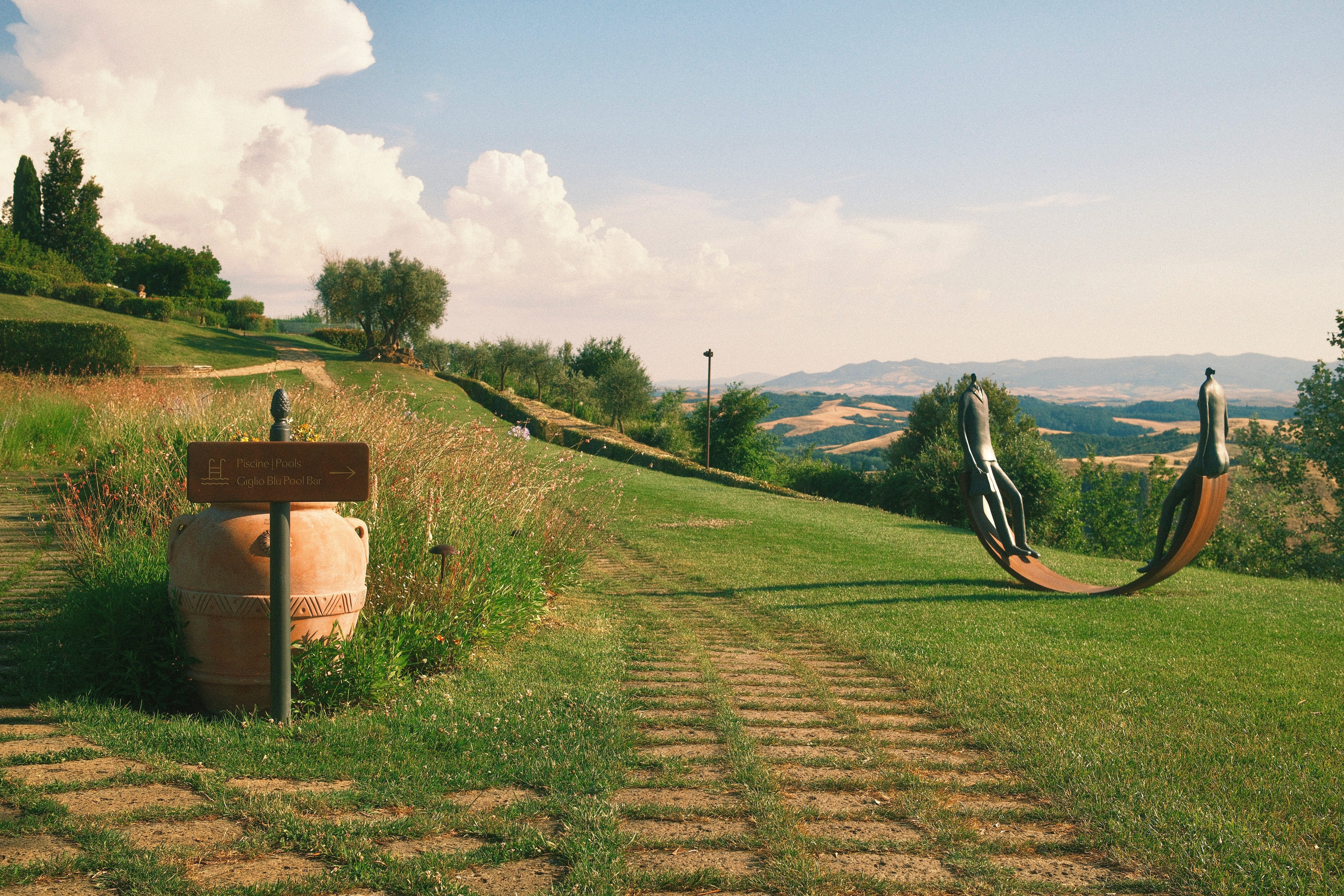
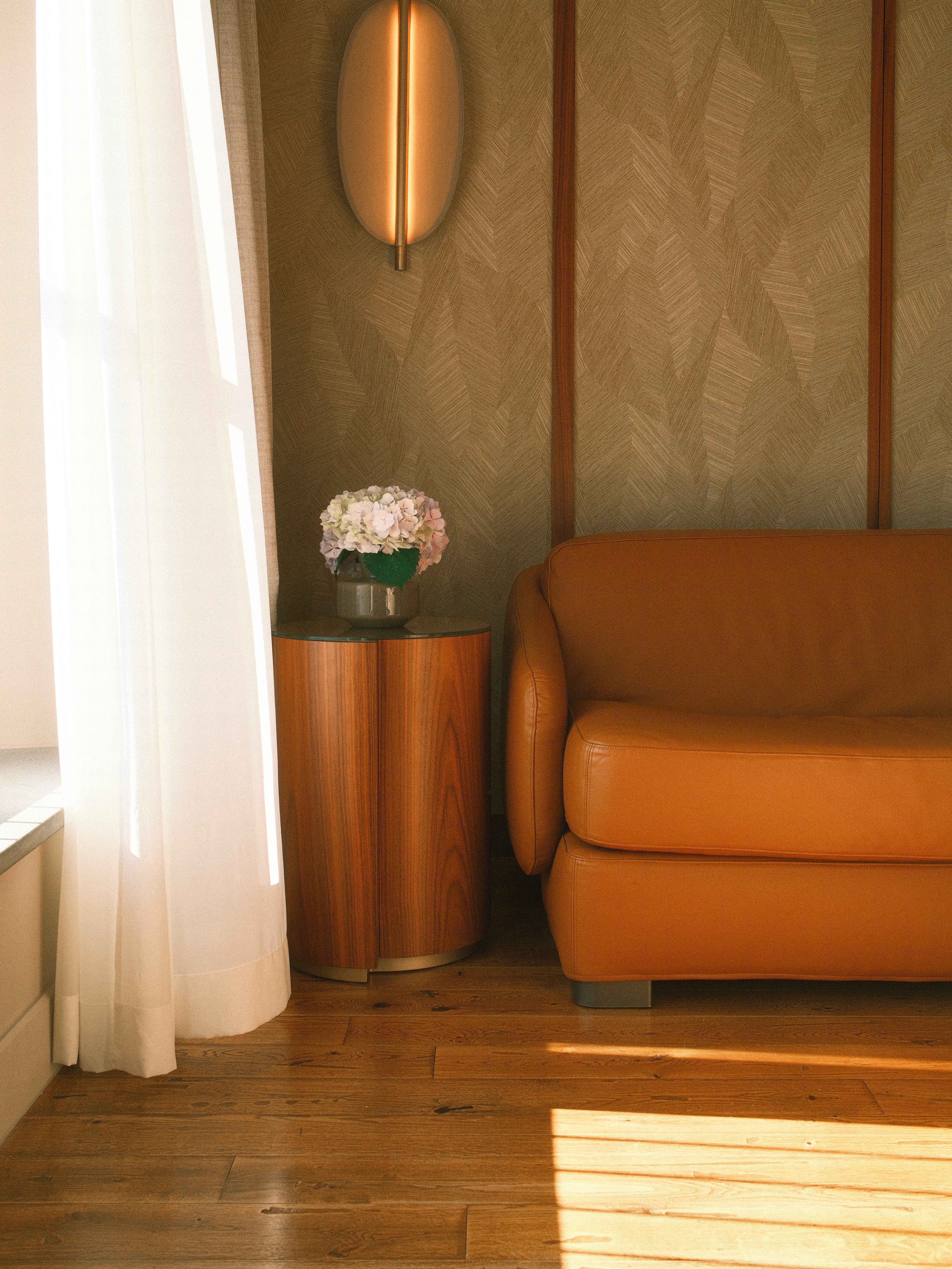
They call it ‘The Tuscan Dream’. But when you finally arrive at Castelfalfi’s strategic hilltop perch, you’ll notice it’s not exactly the image of terracotta, exposed beams and faded frescoes you’d expect from a hotel with such a tagline. Much of it is modern. Low-lit. Polished. The interior influence is unmistakably Asian – even beyond the RAKxa spa. Something you might expect from an existing hotel brand transplanted westward. But no, this is a standalone property. So why doesn’t it all look Tuscan?
Well, in short, because there are already plenty of Tuscan resorts that do. So when Sri Prakash Lohia, an Indian-born Indonesian industrialist, acquired the estate in 2021, he figured: why not do something different, add his own flavour?
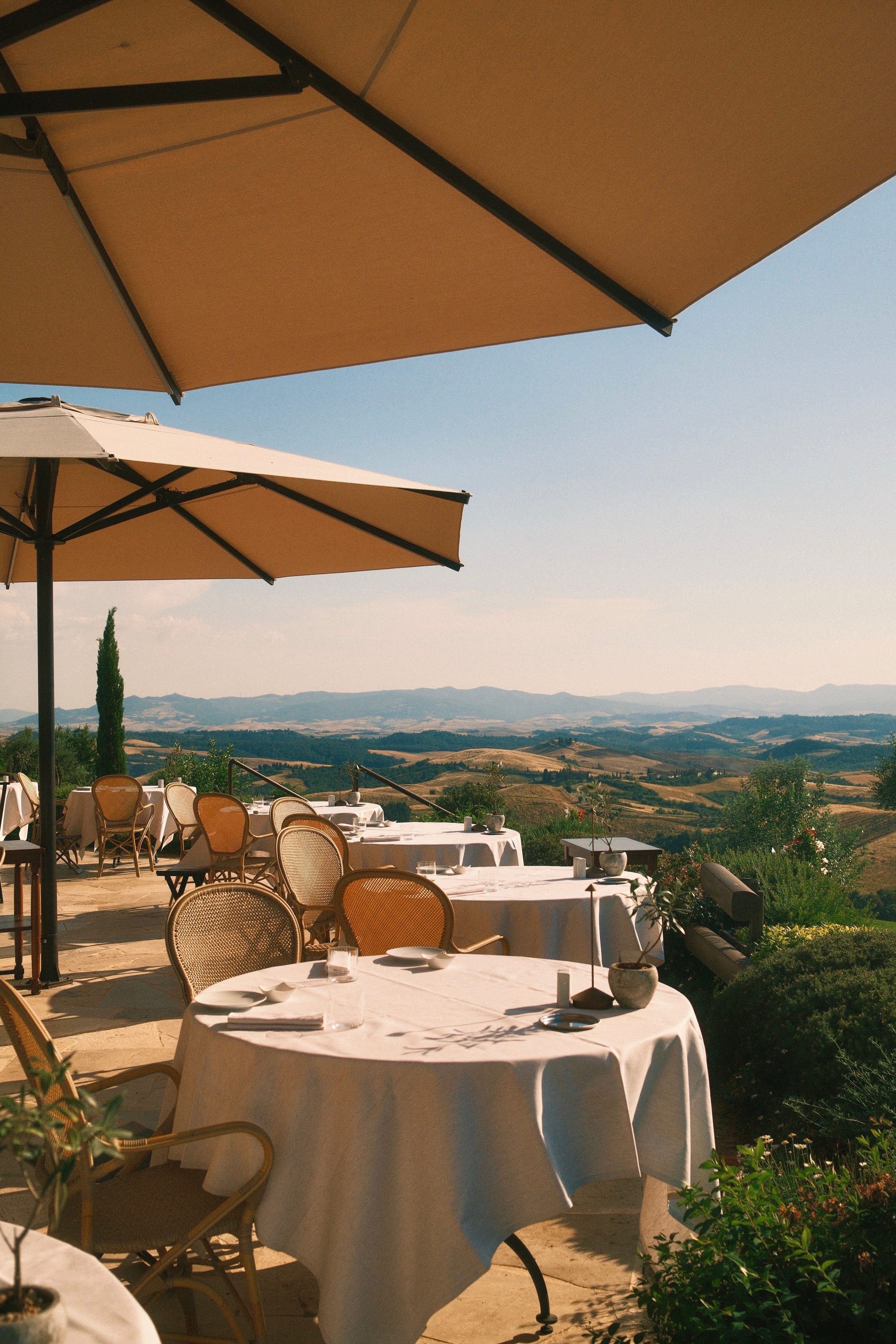
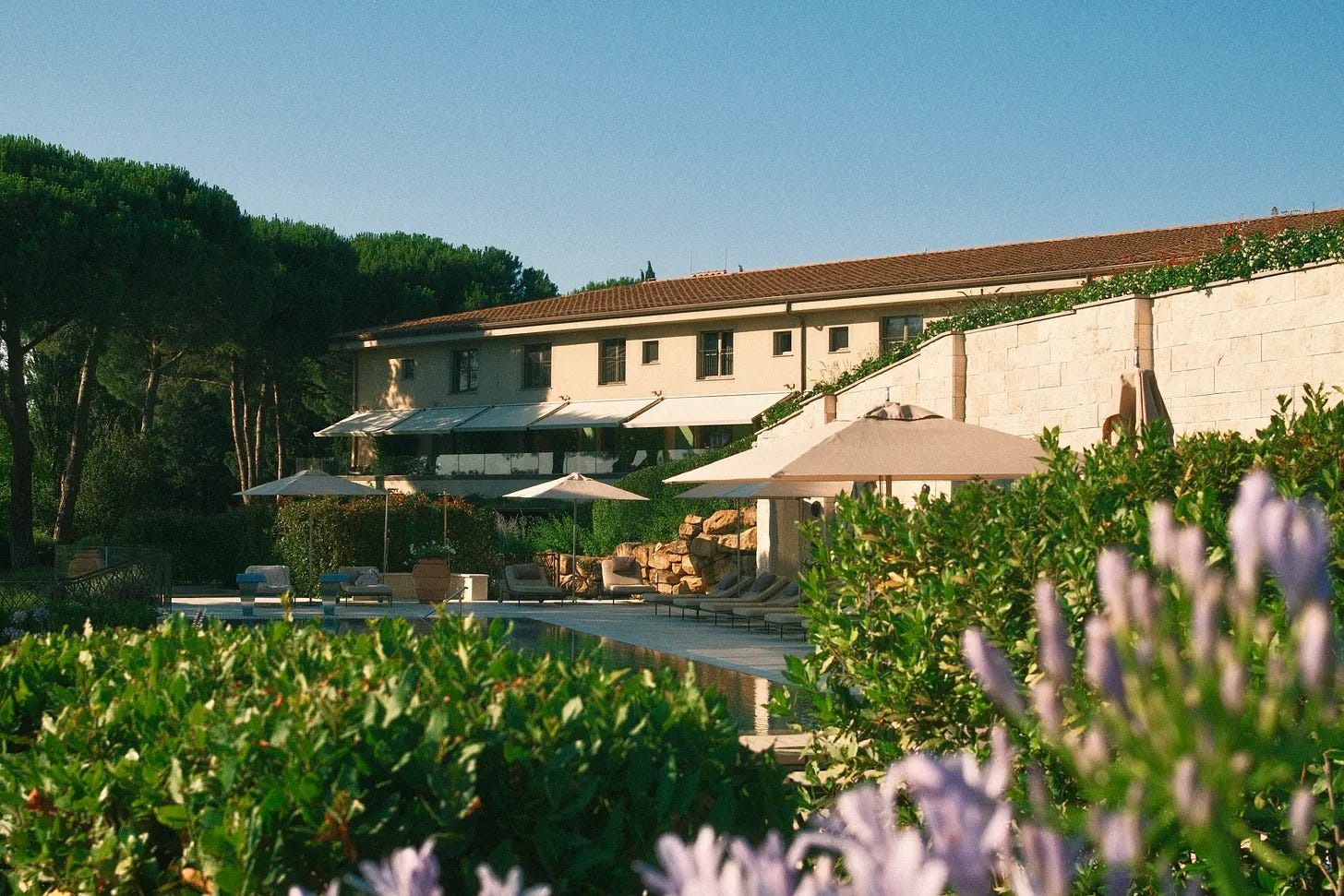
Castelfalfi, in its entirety, is 2,700 acres – much more than your average walled resort. Looking out at the view, whether over a cappuccino at breakfast or a Negroni at aperitivo, much of the beautiful vista your eye meets is actually Castelfalfi land. Going out for a stroll or e-bike ride, it’s hard to know when you’ve left the perimeter. So with all this room, developing the hilltop into a resort didn’t just mean converting the old village into a hotel, which is what most borgos around here are constrained to do. It meant putting up a new building next to it, on empty land, with nothing to restore and nothing to imitate – hence the carte blanche. There was a unique freedom here not to conform. Some people will tell you the result is a place that feels fake. I disagree.
Adjacent to the new development, and connected by a cliffside walkway with the best views on the property, is the old village that includes the once Medici-owned castle – from which the resort derives its name. A Lombard noble called Faolfo fortified this hilltop in the 8th century as a lookout over the valley, and ‘Castrum Faolfi’ eventually wore itself down to ‘Castelfalfi’, as we know it today. By the 15th century, the castle belonged to the Caetani family, and it was Giovanfrancesco Caetani’s marriage to Costanza de’ Medici in 1489 that prompted the refurbishment of the fortress into somewhere rich people actually wanted to spend time. In that sense, I suppose Castelfalfi is merely following tradition – the castle has been carefully restored with exactly the same intention, and now holds La Rocca, the estate’s fine dining restaurant.


So, strictly speaking, we do have other families to thank for their stewardship of this hilltop. But make no mistake, the Medici DNA here runs deep. In the building names. In the crests adorning the walls. In the park below the village, still called Medicean. But, above all, the most Medici thing about the place is its sense of power and scale – it feels rich, in a few meanings of the word. That family knew how to spend, and Castelfalfi, in its modern era, definitely feels like a place where no cost has been spared to ensure excellence.
The difference is that, up on this hilltop, the money has gone into the land and the building rather than into an impression of Tuscany. Sure, you can go truffle hunting, and yes, you can make pizzas and drink local wine looking out at the hills. However, it doesn’t feel painfully manufactured, even though, of course, it is – this is a luxury hotel after all. The resort is honest; they know you’re here for the setting. And so there’s little competing with the hills – the most inimitable of Tuscany’s (many) qualities. When you stay at Castelfalfi, you might not befriend a local nonna over limoncello – it’s not that kind of ‘real’ – but you will end up taking home the place itself and not just a style or aesthetic.
When so much of the travel industry can feel, these days, like a daycare for guests that don’t know any better, it’s refreshing to show up to a place and have an experience that isn’t the exact same as the people you sat next to on the plane. Here, there’s enough on offer that it probably won’t even be the same as the people you sit next to at dinner. Castelfalfi reframes this special sliver of Italy, and in a roundabout way, it does more to preserve it than many of its cookie-cutter competitors. Perhaps here, then, ‘The Tuscan Dream’ isn’t referring to the one you book, but the one you have once you've left.