



The Four Freedoms is presented by Ramp – the finance platform that takes the admin out of company spend, so ambitious businesses can get on with the work itself.
HEADLINES
This week, at a glance.
The US Open ticket price backlash
Soho House’s identity crisis
Jondal: Ibiza’s favourite reservation
What went wrong at Williams?
American Express is cutting credit limits
A weekend with the Bentley Continental GT S
The Blancpain Bathyscaphe 70th: Right watch, wrong price
Is Phia phinished?
Trenitalia is coming for the Eurostar
The Slim Aarons school of hotel design
Slovenia is having a record summer
How fast can you book a private jet?
Inside Germany’s last-man-standing ultramarathon
Marylebone’s new longevity gym
The Cadence Performance Center
The rise of non-toxic workout wear
TIME
What to do: culture, events, and experiences worth your time.
The US Open ticket price backlash

The US Open’s main draw begins on August 30th, and the cost of walking through the gates has become the story before a ball has been struck. Grounds passes carry a face value of $65 to $135 depending on the day, but those tickets sold out within hours of the May presale – the only passes available since have sat on Ticketmaster’s Verified Resale platform, the tournament’s official marketplace, where day one prices hit $363 this week. The pass covers the outer courts and unreserved seats in Louis Armstrong and the Grandstand, excluding Arthur Ashe.
Bill Ackman has led the backlash, pointing out that the USTA is a non-profit whose stated mission is the promotion of tennis, and asking how its marquee event arrived at a gate price roughly eight times Wimbledon’s – where a grounds pass this year cost £33 (about $45) and could actually be bought at that number through the queue. The US Open was long the accessible Slam, the one a New Yorker could decide to attend that morning, and that version is now largely theoretical, it would seem.
Soho House’s identity crisis

When Miami Pool House opened in 2022, it was Soho House distilled to a single idea – a club arranged around a pool, a cocktail list and a DJ booth. Now, a few years later, it closed last month for a full refurbishment, and when it reopens later this year, it will be a dedicated Soho Health Club. That means an indoor-outdoor gym, contrast suites, a racquet club, hyperbaric oxygen and cryotherapy, and a restaurant built around nutrient-rich cooking – the company’s largest South Florida investment since the club opened.
The renovation is the clearest statement yet of where the world’s most famous members club believes its future lies, and it’s a long way from the hedonism the brand was built on. Health and fitness offerings now span 46 houses worldwide; longevity studios are planned for 180 House, Barcelona, New York and the forthcoming Los Cabos opening, and Soho Beach House up the road is getting expanded spa and recovery facilities of its own.
Jondal: Ibiza’s favourite reservation

Six summers after Rafa Zafra first put tables on the sand at Cala Jondal, his beach restaurant has become the reservation to have on the island – a dining room in the sand serving more than 400 covers a day while turning away roughly 400 more requests. Zafra came through the kitchen at El Bulli before building the Estimar restaurants in Barcelona and Madrid, and Jondal applies that pedigree to the chiringuito format. Tapas magazine named it Best Chiringuito 2026 in July, and the Michelin Guide lists the restaurant.
The brand is now travelling, and this is the news: Jondal will stage a pop-up at El Jardín del Ritz at the Mandarin Oriental Ritz, Madrid, from September 10th to the 13th – timed to the city’s first Formula 1 Grand Prix, with reservations open now via reservations@jondal.es. An outpost in Los Cabos is also in the works (with no confirmed opening date), but for now, the original, as ever, takes bookings by WhatsApp.
What went wrong at Williams?
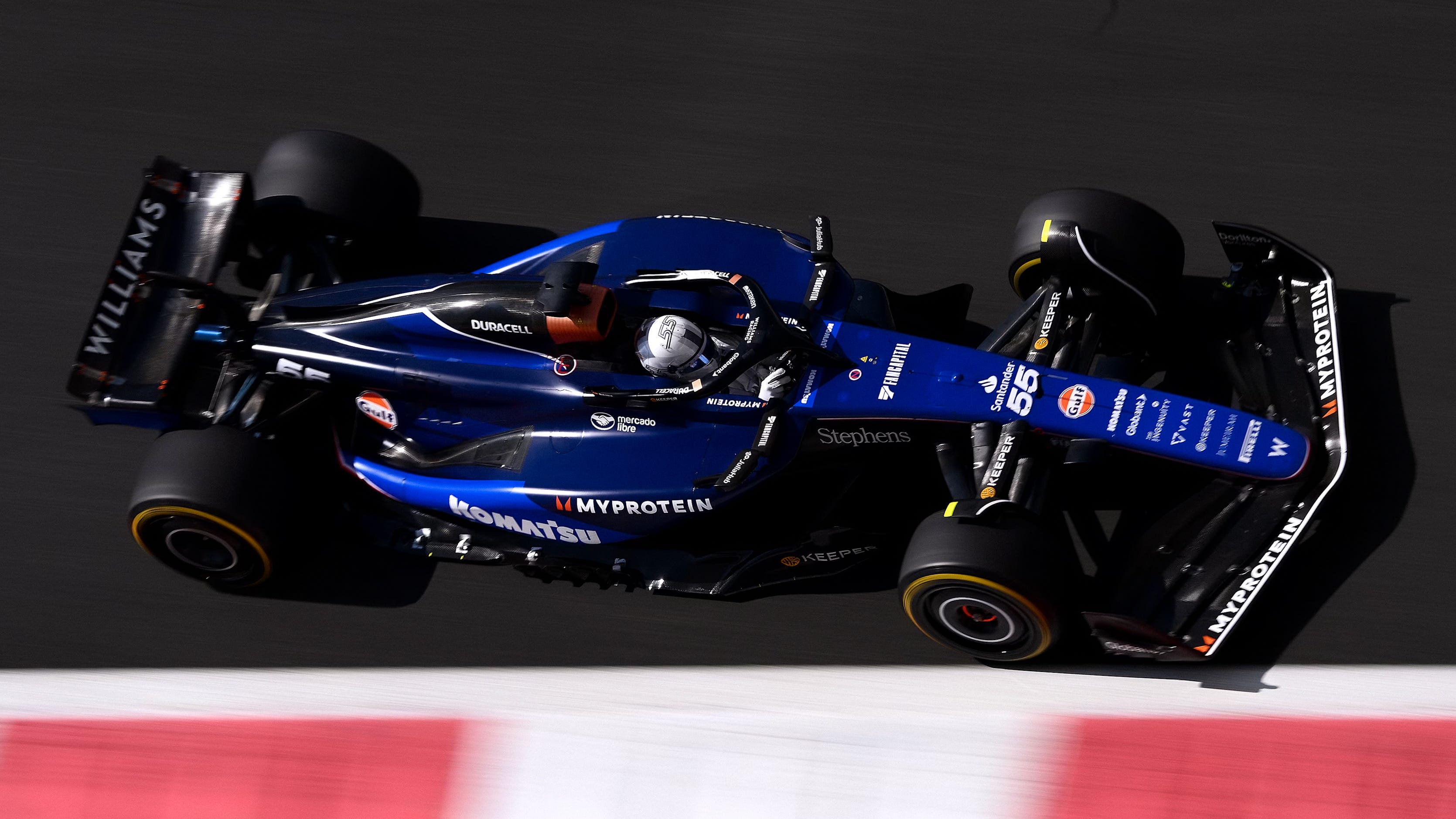
Williams spent two seasons promising that everything was going into the 2026 car, and the bet has not paid off – the FW48 arrived overweight and off the pace, the team hasn’t scored since Monaco, and neither Carlos Sainz nor Alex Albon has finished higher than 15th across the last four races. For a project that treated the new regulations as its great reset, this is the nightmare scenario, and Sainz spent much of the season sounding like a man reconsidering his options.
All that to say, the news that arrived on Wednesday was a bit of a surprise: he signed a multi-year extension reportedly worth up to €30 million (about $35 million) a season – exit clauses attached, mind you. The suave Spaniard is reportedly being paid at title-contender rates to wait for the project to come good, with a door left open if it doesn’t – and the alternatives were thin, since Mercedes and McLaren are settled, the Audi links never hardened, and Cadillac’s debut season has been bruising, with Sergio Pérez retiring from four of the last seven races.
The wider market now waits on bigger dominoes, with Max Verstappen’s reported performance clauses keeping speculation alive and Fernando Alonso’s future the other open question as racing resumes at today’s Dutch Grand Prix. Sainz’s signature settles one seat, and leaves Williams with everything still to prove.
FINANCIAL
What to buy: product launches and material obsessions.
American Express is cutting credit limits

American Express is reportedly cutting spending limits for some of the heaviest spenders on their personal cards, with cardholders describing tens of thousands of dollars – in some cases more than that – removed from their spending power overnight. The accounts circulating over the past two weeks share a profile: high monthly spend, long histories, on-time payments, and no warning.
Amex’s famously misunderstood “no preset spending limit” has always been dynamic, recalculated continuously against a multitude of factors, so the company is technically within their rights to cap spend. What’s drawing attention right now is the pattern – limits reportedly reduced for otherwise healthy customers all at once, which reads to some as a lender pulling back exposure across its book. The recession chatter has followed, with widely shared posts noting that comparable tightening was last reported around 2007 or 2019, though those claims come from commentators, and American Express has not commented on any policy change.
A weekend with the Bentley Continental GT S

Bentley has rarely been the obvious answer to the question of the most fun you can have in a British sports car, and the new Continental GT is the strongest case the marque has made in years. We took one down to Dorset during the peak of the London heatwave, and a few hundred miles made the intent clear – this thing has some edge. Our car was a Continental GT S, finished in matte British Racing Green with carbon ceramic brakes, carbon-fibre detailing and a titanium sports exhaust.
For all that edge, it’s unmistakably a Bentley – supremely comfortable, beautifully put together, and capable of attracting attention without trying. Three people sat in it easily, always impressive for a two-door, and it ate motorway miles with everything you touch feeling as considered as you’d hope. Give it some room, though, and there’s a proper car underneath the luxury – the V8 has grunt, and it’s considerably more playful than the badge suggests.
The fourth-generation Continental is now hybrid across the range, pairing the 4.0-litre twin-turbo V8 with an electric motor, including the GT S. The ‘great’ hybridisation of performance cars still takes some selling, though in a car built to cross countries, the logic lands, and the transition between power sources is reliably seamless. So could an Aston Martin still be the instinctive choice? Probably – though after a weekend with the Continental GT S, it’s no longer such an easy call.
The Blancpain Bathyscaphe 70th: Right watch, wrong price
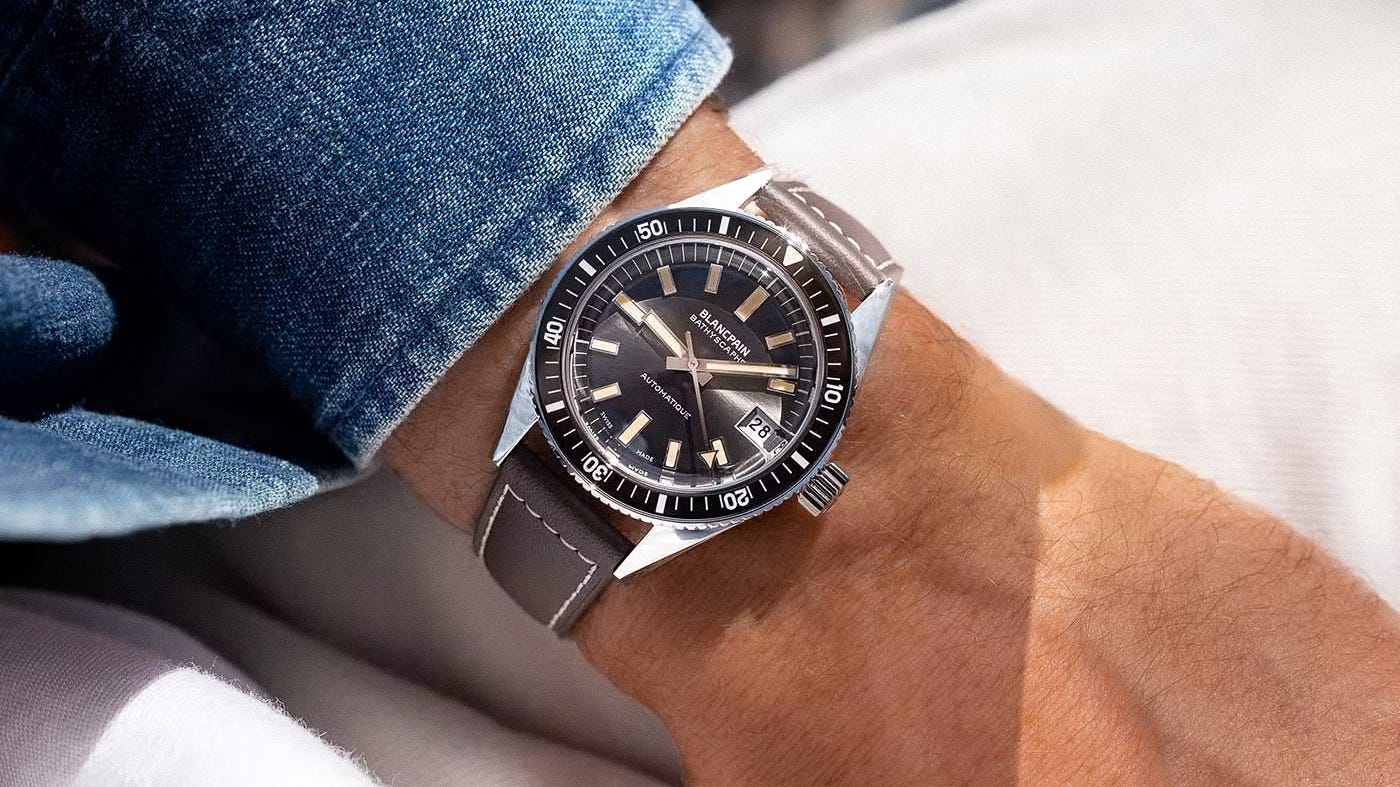
Blancpain marked the 70th anniversary of the Bathyscaphe on Thursday with the watch collectors have spent a decade requesting – a faithful reproduction of a 1968 model, 37.4mm across, with a meteor grey dial and a limit of 300 pieces. The Bathyscaphe arrived in 1956 as the civilian counterpart to the Fifty Fathoms, the watch that effectively invented the dive category, and the reissue restores the compact proportions the modern collection abandoned – now with a sapphire crystal in place of the original’s Hesalite, the brand’s Calibre 1150 with silicon escapement and 100-hour power reserve, and an open caseback.
The number is where it unravels, since the reissue asks CHF 13,800 (about $17,100) – nearly CHF 3,000 over the standard Bathyscaphe at CHF 11,000 (about $13,600) – for a steel, time-and-date diver whose movement architecture traces back to a 1990s design. The watch is exactly right, and the price is a test of how much the nostalgia market will bear – with 300 pieces it will almost certainly sell out, which is different from being reasonable. Available through Blancpain boutiques.
Is Phia phinished?

Phia, the AI shopping assistant co-founded by Phoebe Gates and Sophia Kianni, has spent the month under a cloud after Bloomberg reported its founders knew for roughly seven months that the software was claiming commissions on sales it never drove – a timeline that sits awkwardly beside the company’s July statement that it had learned of the issue “within the last 24 hours.” The affiliate network Impact.com has suspended the company while it audits transactions, and Phia disputes elements of the reporting.
The maddening part is that the product was real, since users plainly loved a tool that scanned a garment page, compared prices across retailers and surfaced the resale market automatically – Phia raised more than $43 million on the strength of it. The business model just doesn’t really match the demand. Shoppers won’t pay for a savings tool, which means every extension monetises through affiliate commissions, and those are awarded to whoever owns the last cookie before checkout. You can see why the category keeps producing the same scandal – Honey faced its own allegations in late 2024 – and it is why the perfect shopping assistant remains unbuilt in an era when the technology is the easy part. AI can now read a product page as well as any personal shopper, and it still can’t fix an incentive problem.
The tools that survive scrutiny are the ones that make their money in the open, and in fashion that mostly means the aggregators – Lyst and ShopStyle index thousands of retailers, track price drops and alert you when the coat you’ve been circling gets marked down, earning a straightforward referral with no cookie games required. The resale check Phia automated is still worth doing manually, with Vestiaire Collective or The RealReal open in a second tab, since the best price on a current-season piece is often a barely worn one. Beyond that, the honest answer is that nothing needs installing at all.
LOCATION
Where to go: travel and mobility for the globally curious.
Trenitalia is coming for the Eurostar

Trenitalia has confirmed a €2 billion (about $2.3 billion) order for 19 new high-speed trains, with ten earmarked for a planned London to Paris service targeting 2029 – the first direct challenge to the Eurostar since its cross-Channel monopoly began in 1994. For the millions of Brits for whom "the Eurostar" is simply the name of the route, competition should promise what the past three decades haven't offered – more departures, more seats and a reason for fares to come down.
The corridor is suddenly crowded with suitors, since Virgin has declared plans for a rival service around the end of the decade, while the Spanish-backed Evolyn and the start-up Gemini Trains have stated intentions of their own – though Trenitalia’s confirmed rolling-stock order makes it the most concrete challenger so far, and the widely expected first mover. The company’s high-speed Frecciarossa services have operated inside France since 2021, and anyone smirking at the thought of Italian trains on the route has presumably not stood on a British platform lately. Cross-Channel timelines have slipped before, so 2029 remains a target, with routes and fares still to be announced.
The Slim Aarons school of hotel design
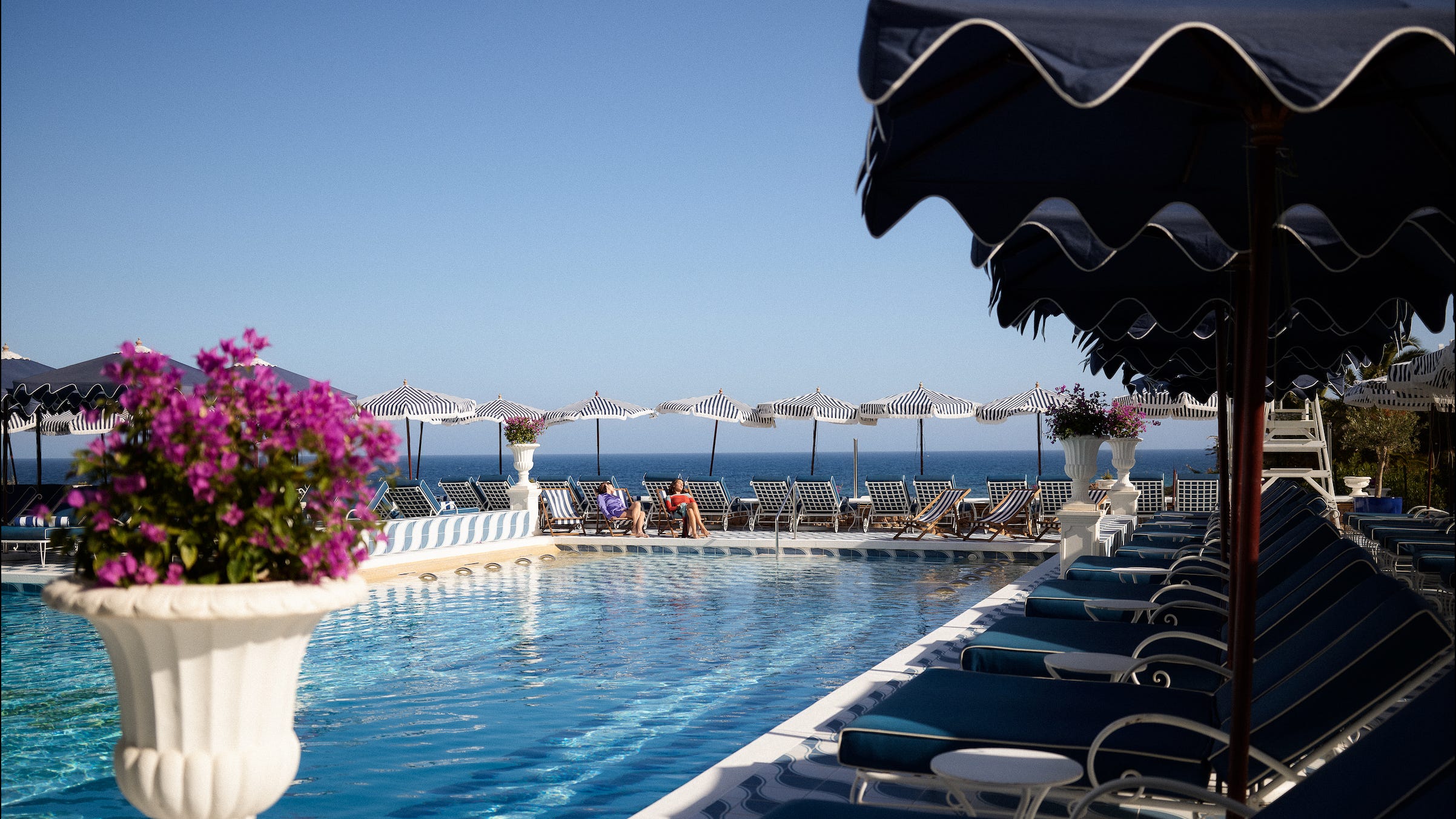
Hotel design has developed a longing for 1965, and two properties this year make the case plainly. Zannier Île de Bendor, the Riviera's blockbuster opening, welcomed its first guests in May after a five-year revival of Paul Ricard's private island off Bandol. Its 39-room Delos wing is styled explicitly on the refined spirit of the 1960s French Riviera – fitting, for the island where Josephine Baker and Salvador Dalí once mixed with locals. Arnaud Zannier calls the island Paul Ricard’s dream, “a place of freedom, creativity and joy,” and the 93-key property leans fully into the era its founder defined.
In Ibiza, meanwhile, Mongibello has relaunched after a refurbishment that carried it from four stars to five, planting the Italian Riviera on the White Isle – a blue-and-white colour scheme, cobalt terrazzo floors and striped umbrellas, within reach of Pacha and UNVRS yet devoted to the art of doing nothing, with DuJour this week describing the poolside scene as evoking “a Slim Aarons lithograph.” The reference is literal inside, where his prints hang throughout the property, and his books stack the coffee tables.
The estate-stamped prints have sold in the thousands for years, and hospitality has now caught up to the wall art – selling the sixties as a place to check into, with poolside glamour, long lunches and the flattering light of an era most guests never saw. Zannier Île de Bendor operates seasonally from May 1st to November 1st, seven minutes by shuttle from Bandol via zannierhotels.com, and Mongibello takes bookings direct year-round.
Slovenia is having a record summer

Slovenia is on course for its best tourism year yet, with June overnight stays passing two million for the first time and the first half up around 5% on 2025 – itself a record year, with 17.8 million overnight stays. Records have become an annual event, telling the story of a country graduating from stopover to destination.
The pitch, for anyone who has found Austria or northern Italy appealing, is that Slovenia sits directly between them with a fraction of the crowds – Ljubljana remains one of Europe’s most pleasant small capitals, Lake Bled takes the postcard, and beyond them sit the Julian Alps, the Soča valley, the wine country of Vipava and Brda, and the Adriatic sliver at Piran. The hospitality has matured well beyond the capital too, with the strongest recent growth recorded in smaller regions like the Vipava Valley, Brda and Dolenjska, where serious countryside stays keep arriving.
Official July figures land from the statistical office within days, and every indicator this year has pointed the same way. September and October remain the move, with the Alps and the coast at their best and the peak crowds gone.
How fast can you book a private jet?

Chartering a private jet has long been a strangely analogue exercise – a chain of brokers, calls and emailed quotes that can stretch across a day, for a product costing five figures an hour. The newest attempt to fix it comes from EnterJet, the European charter marketplace founded in 2024 by Charles Robinson, whose AI agent Celeste takes bookings over WhatsApp – availability and pricing drawn from operators in real time and a human team supervising anything that needs eyes.
The proof case is a 3am request – a slot no broker loves. The client messaged Celeste on WhatsApp, spent around three minutes describing the trip, and had a confirmed $13,000 booking 46 minutes later, which EnterJet claims came in 5 to 10% below a traditional broker's price. The waiting time belongs to the operators, who still have to confirm the aircraft, so the three-minute pitch describes the client's side of the process, and that part appears to be real.
The rest of the sector is chasing the same fix, with Jet.AI booking by text and Elevate Jet pricing trips through an AI named Ruby, while traditional brokers argue that clients still want a human on the other end. For a service built on buying back time, the friction was always the odd part – and the answer to the question above is now minutes. Celeste operates via enterjet.co.
HEALTH
How to live: wellness, performance, and the pursuit of longevity.
Inside Germany’s last-man-standing ultramarathon

The Last Soul Ultra crowned its champion Tuesday morning at a former military base near Düsseldorf, whose location the organisers refuse to publish. American Mark Dowdle ran a four-mile loop every hour, on the hour, for 94 consecutive hours – 395 miles in all, outlasting a field of 169 runners.
The format is simple and brutal: every runner starts the same loop at the top of each hour; anyone who fails to finish or restart in time is eliminated, and the race ends only when one runner completes a loop alone. No spectators are admitted, and the venue stays secret. The race is instead followed on a round-the-clock livestream in German and English, while runners operate from a base camp of three-metre pitches, and any assistance on the loop means disqualification.
The event was created by ultrarunner Kim Gottwald together with former Germany footballer André Schürrle, and Gottwald won the first edition himself last October, at 67 laps – a number Dowdle has just raised by 27, which says something about how fast the format is professionalising. Entry is open to application from anyone, though the organisers handpick the field of 150, with selected runners paying €100 (about $115) within 48 hours to confirm their place. Dates for the next edition are unannounced, and applications, when they open, can be found at lastsoulultra.com.
Marylebone’s new longevity gym
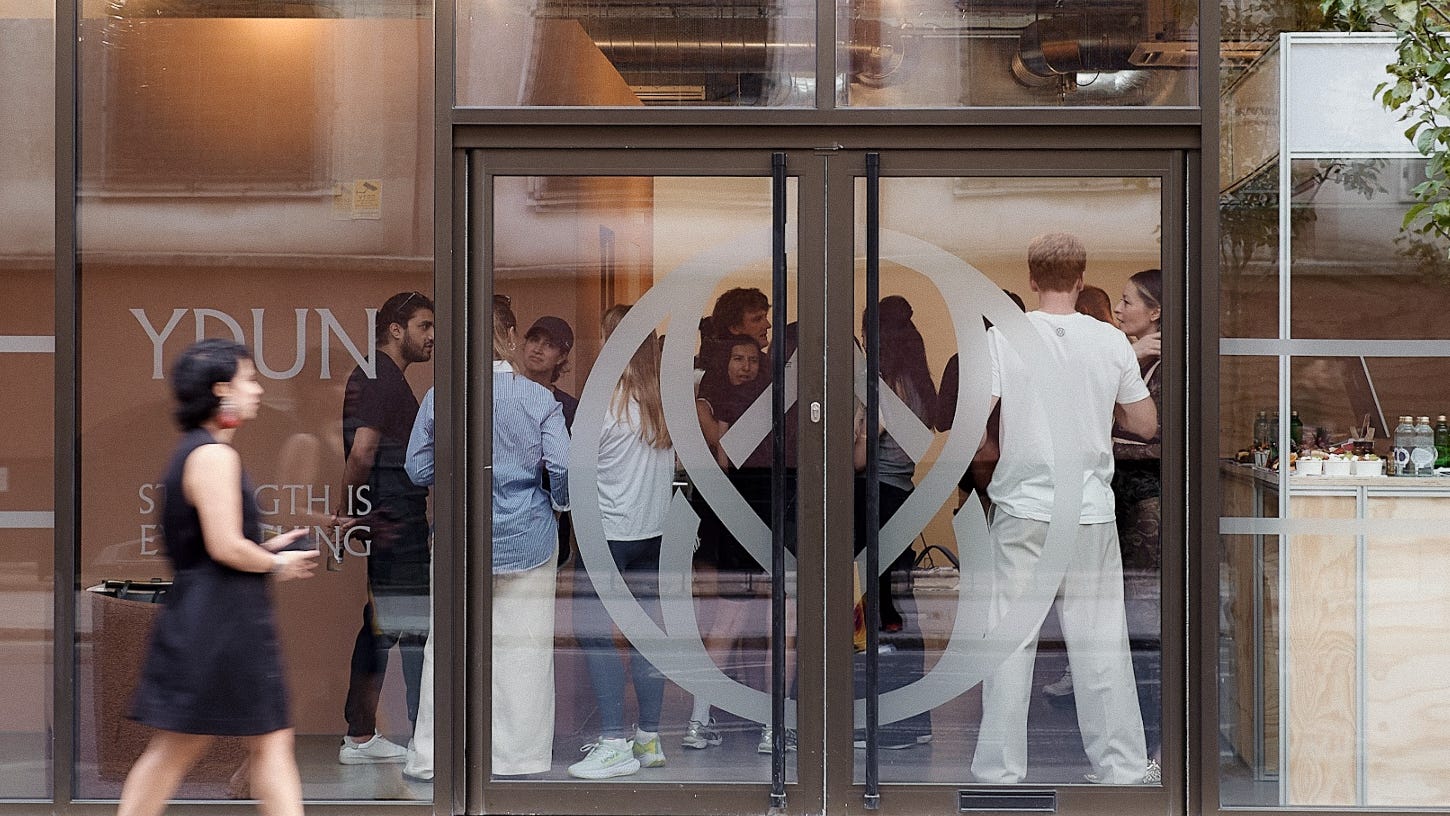
Ydun, the strength studio founded in Milan a few steps from the Duomo, has opened in Marylebone with a training model built on the argument that muscular strength is the organising principle of longevity. Every member starts with a comprehensive assessment that shapes a personal training and recovery programme, and the pitch targets time-poor professionals who want the highest physiological return per hour spent.
The thesis has serious research behind it, since strength and muscle mass correlate strongly with healthy lifespan, metabolic function and bone density, and Ydun leans particularly into the case for women – positioning progressive loading as the foundation for bone density and hormonal health through every stage of life. After years of longevity conversation dominated by supplements, wearables and cold water, a studio arguing for load, properly programmed, is a welcome correction.
Further international locations seem to be signalled, memberships are by enquiry, and studio tours are bookable at ydun.life, with pricing as yet unpublished.
The Cadence Performance Center

Ross MacKay and George Heaton, the founders of the hydration brand Cadence, are building a training facility and headquarters in Los Angeles – the Cadence Performance Center, revealed through their own channels and positioned as the brand’s physical home. The CPC will house a strength and conditioning floor, field turf, a treadmill room, a product innovation space and a fuel shop stocked with the brand’s own range, alongside the company’s offices. “This is not a gym, not an office. It is a home,” MacKay wrote in a letter marking the project.
The CPC is the most literal expression yet of the founder-athlete culture the two men have come to represent (no pun intended, George), and their track records are why it warrants attention. MacKay is a former professional tennis player who founded the plant-based company Daring, worth a reported $325 million, while Heaton co-founded Represent, the British label whose 247 line turned his own training obsession into a category-dominating activewear business. Cadence is the real story, though, since the brand they launched in 2024 on the argument that hydration needed more salt has grown from a bootstrapped waitlist into shelves across the country. A clubhouse where athletes, staff and subscribers train under one roof is the perfect next step, and we’ll be anticipating it with excitement.
The rise of non-toxic workout wear

Katherine Sara, a biomedical science graduate with just over half a million TikTok followers, has become the face of a small boom in non-toxic workout wear. She relaunched her five-year-old label Jubilee as Layere last July – walking away from a brand generating more than $100,000 a month to rebuild it around the conviction that plastic doesn’t belong on skin – and the range spans pyjamas to workout sets, cut from 95% organic cotton and 5% spandex, with low-impact dyes and no PFAS repellents or antimicrobial coatings, at around $274 a set.
The marketing is where this differs from the green brands that came before, since sustainable fashion has spent a decade selling the planet's health, and Layere sells the wearer's – leading with microplastics on open pores and finishes the brand says research has linked to endocrine concerns, with the environmental case in a supporting role. Billed as “clean non-toxic organic wear,” Layere moves product through comment sections and unboxings, and demand is now outpacing supply. This week’s drop sold through right away.